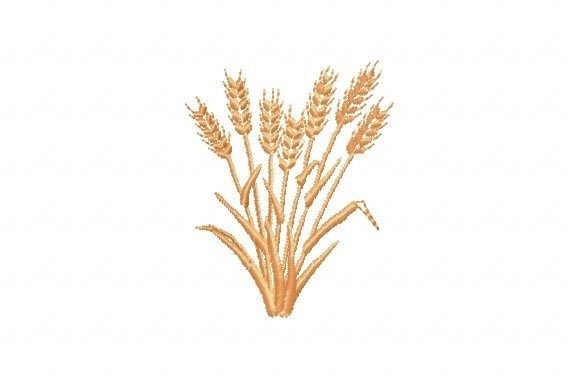
Wheat
A Professional Embroidery Design for Small Business Merchandise
As an experienced embroidery designer, I’ve reviewed countless designs for small businesses looking to elevate their branding through custom apparel and merchandise. Wheat stands out as a versatile and professional machine embroidery design that can be seamlessly integrated into various business applications. Whether you're a boutique owner, café operator, or handmade brand creator, Wheat offers the potential to enhance your product line with a touch of elegance and authenticity.
First Impressions: A Blend of Elegance and Simplicity
Upon first glance, Wheat exudes a sense of simplicity that belies its detailed craftsmanship. The design feels both modern and classic, making it adaptable to a wide range of visual styles. It carries a subtle rustic charm that aligns well with food-related brands, especially those in the café, bakery, or artisanal space. The clean lines and natural motif suggest a premium quality that can resonate with customers seeking authenticity and care in their purchases.
Real-World Applications: From Patches to Tote Bags
Wheat is designed to perform well in multiple commercial embroidery scenarios. As an embroidered patch, it can serve as a striking accent on staff uniforms, aprons, or branded caps. Its intricate detailing makes it ideal for cap embroidery and tote bag design, where visibility and clarity are key. For small business merch, Wheat can be used as a brand identity element on tote bags, work shirts, or even product packaging accents.
- Embroidered Patch: Perfect for adding a personalized touch to uniforms or customer gifts.
- Chest Logo Accent: Ideal for staff wear to reinforce brand presence.
- Sleeve Detail: Adds a subtle yet impactful branding element to custom apparel.
- Apron Embroidery: Enhances functionality with a visually appealing design.
- Tote Bag Design: Offers a durable and eye-catching branding solution.
- Product Packaging Accents: Elevates the overall aesthetic of your merchandise.
Design Considerations for Commercial Use
While Wheat is visually appealing, there are a few considerations to keep in mind when using it in real-world settings. The design’s high stitch density and detailed outlines may require careful placement, particularly on curved surfaces or small patch sizes. Additionally, the design’s texture and fabric compatibility should be tested before production to ensure optimal results.
For instance, Wheat may not perform as well on dark uniforms or fabrics with a textured surface. It’s essential to review thread color contrast and spacing to ensure the design remains legible and visually cohesive across all products. Testing the design in black and white before finalizing can also help identify any potential issues with clarity and detail.
Enhancing Brand Identity and Customer Trust
When used thoughtfully, Wheat can significantly impact your brand’s visual identity. Its elegant and refined appearance contributes to a sense of professionalism and trustworthiness, which is crucial for small businesses aiming to stand out in competitive markets. By incorporating Wheat into your product line, you create a consistent visual language that reinforces your brand’s values and personality.
Moreover, Wheat has the potential to increase customer engagement by offering a unique and memorable branded experience. Whether displayed on a cap, apron, or tote bag, the design adds value to your finished product while enhancing the overall perception of your brand.
Practical Tips for Embroidery Designers
If you’re considering using Wheat for your next project, here are some practical tips to ensure success:
- Test in Black and White: Assess how the design looks without color to identify any potential issues with contrast or detail.
- Check Patch Size Compatibility: Ensure the design works well at smaller scales, especially for embroidered patches.
- Review Thread Color Contrast: Choose colors that complement your brand and maintain visibility on different fabrics.
- Inspect Spacing and Stitch Density: Confirm that the design maintains clarity and definition across all product types.
- Confirm Hoop Size: Ensure the design fits within your embroidery hoop without distortion.
- Use Proper Stabilizer: Protect the fabric and design integrity during the embroidery process.
- Create a Printable Mockup: Present a realistic preview to clients or stakeholders before production.
- Compare with Other Design Assets: Maintain visual consistency across your brand’s design portfolio.
- Confirm Commercial Licensing: Verify that the design is suitable for mass production and business use.
Conclusion: A Versatile Choice for Small Business Merch
Wheat is more than just a machine embroidery design—it’s a powerful tool for small businesses looking to elevate their branding and product offerings. With its versatility, elegance, and adaptability, it can be used across a wide range of applications, from custom apparel to digital embroidery file projects. When implemented correctly, Wheat can enhance your brand’s visual identity, build customer trust, and contribute to the long-term success of your business.